Because I have written about this before on this blog, here is further news of Catholic / Evangelical partnership, only this time its not among Anglicans. I would venture to guess that as little as Anglo-Catholics and Anglo-Evangelicals have in common, its nevertheless rather more than what Roman Catholics and Evangelicals have in common. That is, apart from the Holy Ghost.
Anyway, I find it encouraging somehow. Read the whole thing here. Thank you Fr. Harmon.
BUENOS AIRES, JULY 11, 2005 (Zenit.org).- Catholic and evangelical figures are finding a new area of common agreement: the need for mutual forgiveness for their disagreements.
That development marked the 2nd Fraternal Meeting called by Renewed Communion of Evangelicals and Catholics in the Spirit (CRECES) and held in Buenos Aires from July 2-4.
The meeting "was not an isolated event," both sides said in a Joint Declaration presented during the meeting. "Similar experiences are taking place and will continue to take place in greater measure in all the nations of the world."
Attending the meeting was Matteo Calisi, president of the International Fraternity of Covenant Charismatic Communities and Associations and founder and president of the Community of Jesus, a Catholic charismatic group that arose in Bari, Italy.
"I heartily encourage you to persevere in this path of praise and adoration, reconciliation and spiritual ecumenism which you already undertook last year," said Cardinal Jorge Mario Bergoglio, archbishop of Buenos Aires, in a letter addressed to the participants of the CRECES meeting.
Tuesday, July 12, 2005


Monday, July 11, 2005
jay farrar and the new son volt
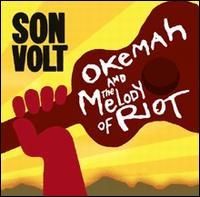
A little while ago, I took a break from translating some Anselm to read my housemate's new issue of Harp Magazine. I was reading an interview with Son Volt's brainchild Jay Farrar about their new album, Okemah and the Melody of Riot. I came back into my room, where I had been listening to NPR on the internet, and there was the last ten seconds or so of a song playing, and I thought to myself "That sounds like Jay Farrar." To my surprise, as the song faded out, the announcer came on, saying "That was a track from the new Son Volt album, Okemah and the Melody of Riot." Weird. I think maybe the Lord wants me to buy the new album, which is released tomorrow (July 12).
From the Harp Magazine interview:
The album ends with the Neil Young-sounding "World Waits for You," a beautifully upbeat piano-composed tune ("I've been trying to do more of that" he mumbles) that I imagine, on first listen, is probably about [Farrar's] children.
the feast of st. benedict of nursia
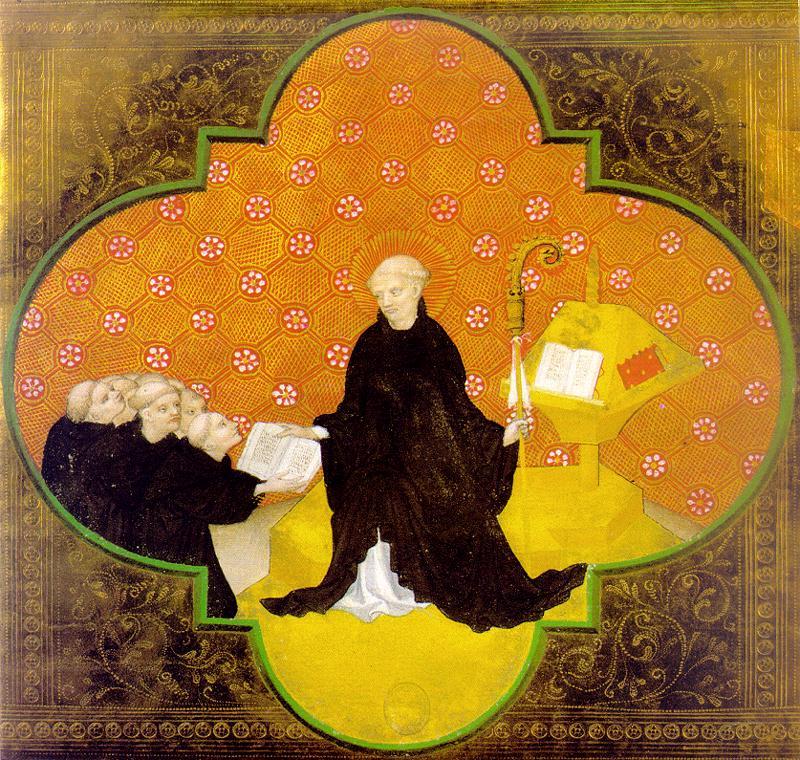
L I S T E N carefully, my child,
to your master's precepts,
and incline the ear of your heart (Prov. 4:20).
Receive willingly and carry out effectively
your loving father's advice,
that by the labor of obedience
you may return to Him
from whom you had departed by the sloth of disobedience.
To you, therefore, my words are now addressed,
whoever you may be,
who are renouncing your own will
to do battle under the Lord Christ, the true King,
and are taking up the strong, bright weapons of obedience.
And first of all,
whatever good work you begin to do,
beg of Him with most earnest prayer to perfect it,
that He who has now deigned to count us among His children
may not at any time be grieved by our evil deeds.
For we must always so serve Him
with the good things He has given us,
that He will never as an angry Father disinherit His children,
nor ever as a dread Lord, provoked by our evil actions,
deliver us to everlasting punishment
as wicked servants who would not follow Him to glory.
(From the Holy Rule of St. Benedict)
Saturday, July 09, 2005
homosexuals in rc seminaries
Sources indicate that the long-awaited Vatican document on the admission of homosexuals to seminaries is now in the hands of Pope Benedict XVI. The document, which has been condensed from earlier versions, reasserts the response given by the Congregation for Divine Worship and the Discipline of the Sacraments in 2002, in response to a dubium submitted by a bishop on whether a homosexual could be ordained: "A homosexual person, or one with a homosexual tendency, is not fit to receive the sacrament of Holy Orders."
Read the whole thing here, which comes via Fr. Harmon.
I hope this doesn't go through. If my (admittedly limited) experience is any guide, there are plenty of holy, talented, homosexual priests, called by God, faithfully proclaiming his gospel. Homosexuality is a cross borne by many faithful Christians, and as such can itself be an instrument of sanctification and, indeed, redemption. To exclude people from the priesthood only because they are homosexual is an exhibition of institutional paranoia and a pious missapplication of Biblical truth.
Read the whole thing here, which comes via Fr. Harmon.
I hope this doesn't go through. If my (admittedly limited) experience is any guide, there are plenty of holy, talented, homosexual priests, called by God, faithfully proclaiming his gospel. Homosexuality is a cross borne by many faithful Christians, and as such can itself be an instrument of sanctification and, indeed, redemption. To exclude people from the priesthood only because they are homosexual is an exhibition of institutional paranoia and a pious missapplication of Biblical truth.
christoph cardinal schonborn clarifies rc teaching on evolution
EVER since 1996, when Pope John Paul II said that evolution (a term he did not define) was "more than just a hypothesis," defenders of neo-Darwinian dogma have often invoked the supposed acceptance - or at least acquiescence - of the Roman Catholic Church when they defend their theory as somehow compatible with Christian faith.
But this is not true. The Catholic Church, while leaving to science many details about the history of life on earth, proclaims that by the light of reason the human intellect can readily and clearly discern purpose and design in the natural world, including the world of living things.
From the New York Times on Thursday. Read the whole thing here. Today there is an article about Cardinal Sconborn's essay.
What is WB's view of evloution? He isn't very interested. I'm happy to defer to the scientists -- so long as they aren't those vitriolic atheist scientists, who have those fish-with-legs that say "Darwin" on the backs of their cars. Those people need to calm down. But apart from that, it seems to me that some "Creationists" are out of control and, without meaning to, distort the message of Genesis. I seem to recall that C.S. Lewis had an enlightened and enlightening essay about how Christians need not get their knickers in a knot about evolution. I commend it to your attention, if you can find it.
But Cardinal Schonborn's point is well taken, in a sense. We must guard against those scientists who, upon the latest discovery of an eighty trillion year old Australoanthropomorphosaurus fossil, cry "There is no god!" If there are such scientists.
But this is not true. The Catholic Church, while leaving to science many details about the history of life on earth, proclaims that by the light of reason the human intellect can readily and clearly discern purpose and design in the natural world, including the world of living things.
From the New York Times on Thursday. Read the whole thing here. Today there is an article about Cardinal Sconborn's essay.
What is WB's view of evloution? He isn't very interested. I'm happy to defer to the scientists -- so long as they aren't those vitriolic atheist scientists, who have those fish-with-legs that say "Darwin" on the backs of their cars. Those people need to calm down. But apart from that, it seems to me that some "Creationists" are out of control and, without meaning to, distort the message of Genesis. I seem to recall that C.S. Lewis had an enlightened and enlightening essay about how Christians need not get their knickers in a knot about evolution. I commend it to your attention, if you can find it.
But Cardinal Schonborn's point is well taken, in a sense. We must guard against those scientists who, upon the latest discovery of an eighty trillion year old Australoanthropomorphosaurus fossil, cry "There is no god!" If there are such scientists.
Friday, July 08, 2005
follow this closely blogsters; its complicated

From St. Isaiah the Solitary (in the Philokalia): If you find yourself hating your fellow men and resist this hatred, and you see that it grows weak and withdraws, do not rejoice in your heart; for this withrawal is a trick of the evil spirits. They are preparing a second attack worse than the first; they have left their troops behind the city and ordered them to remain there. If you go out to attack them, they will flee before you in weakness. But if your heart is then elated because you have driven them away, and you leave the city, some of them will attack you from the rear while the rest will stand their ground in front of youl and your wretched soul will be caught between them with no means of escape. The city is prayer. Resistence is rebuttal through Christ Jesus. The foundation is incensive power.
St. Isaiah is talking here about hatred of our fellow men, but this advice seems appliicable to all kinds of demonic attack and temptation. There are some technical terms in this little treatise, namely at the end. First there is "rebuttal". Here is how my little Philokalia glossary defines it, being a translation of "antilogia" or "antirrisis": the repulsing of a demon or demonic thought at the moment of provocation... or, in a more general sense, the bridling of evil thoughts. The second technical term is "incensive power". This is in reference to one of the three Platonic divisions of the soul. The three divisions are (1) the Appetitive, (2) the Intellective, and (3) the Spiritive or Incensive. The idea is that each can be bent to negative or positive action. The spiritive or incensive part of the soul can be exercised in the hatred of sin and vice, and directed against the temptations of the devil his demons.
the wb daily prayer scheme
Because daily prayer is an integral part of the Christian life, I offer the scheme which I have adopted with mixed success. It is, basically the fourfold Book of Common Prayer daily office. Typically I pray two or three of the offices, though rarely all four. A couple of years ago, my mother gave me a copy of the Daily Office Book, which really has lived up to its advertised ability to painlessify the praying of the Offices, which it does by including the lectionary readings in sequence. Unlike using the Book of Common Prayer, that is, you don't need a Bible. Here is how it is meant to go in my day:
(1) Morning Prayer, Rite 1
I try to say this shortly after rising in the morning. Lately this has been at about 11:00 a.m. Shame. More often it is at about 6:30 or 7:00. I have been saying the Confession in Latin (because I am trying to learn Latin this Summer, and memorizing Latin prayers is part of the plot). I add the traditional versicle and response "V: Praise ye the Lord. R: The Lord's Name be praised," after the opening versicles and doxology. I use the alternative form of the doxology, which is provided for in the appendicized rubrics for the Daily Office ("Glory be to the Father and to the Son and to the Holy Ghost; as it was in the beginning is now and ever shall be, world without end..."). I almost always read two Lessons at Morning Prayer, the Old Testament Lesson and the Epistle or Acts or Revelation, saving only the Gospel lesson for Evensong. Invariably I say the Song of Zehariah as one of the Canticles, and select another Canticle on the spot -- typically one of the Songs of Isaiah or the Te Deum. I usually say the salutation and bidding (The Lord be with You. And with thy spirit. Let us pray.), though I don't know if that is appropriate when one is saying the office by oneself. This I follow with the Kyrie (Lord have mercy upon us. Christ have mercy upon us. Lord have mercy upon us.) and proceed thence to the Our Father. There follows the suffrages (in the morning I usually say the shorter suffrages from the end of the Te Deum -- the second set in the Prayer Book). These I follow with the Collect of the Day (Proper 9 currently), and the Collects for Grace and Peace. To this I add, invariably, the first of the Collects for Mission. Occasionally I say the General Thanksgiving, but usually not. I close the Office as indicated ("Let us bless the Lord. Thanks be to God.), invariably ending with "The Grace..." Sometimes I bookend the Office with "In the Name of the + Father..." And sometimes I announce intentions before hand in the spirit of "prayer before praying" and also as a form of intercession.
(2) The Little Office, or An Order of Service for Noonday (as in the Prayer Book)
This I recite as indicated in the Prayer Book, with no variations, except I follow the Psalter through in course. That is, I say the psalms as demarcated in the Prayer Book Psalter, beginning with Psalms 1-5 ("First Day: Morning Prayer"), etc.
(3) Evensong, Rite 1
This follows more or less the pattern of Morning Prayer, that is with all the same changes (Confession in Latin, "Praise ye the Lord, etc." added, the Kyrie inserted, the alternative doxology, etc. etc.). I usually say either the Magnificat or the Nunc Dimitis for the canticle. Invariably use the first set of suffrages. I say three collects (Of the Day, Lighten our darkness, etc., and Peace, or something else chosen on the spot) and, again, the Prayer for Mission. Again, I don't often say the General Thanksgiving, nor the Prayer of St. Chrysostom, but occasionally I do. I always end with The Grace, etc. And Evensong is often bookended with In the Name of the + Father, etc.
(4) Compline
Compline is the Office I am most likely to neglect, usually because I wind up saying Evensong shortly before I go to bed, though I've been trying (without much success) to get out of that habit. When I say it, I say it as it is in the Prayer Book. I have mixed feelings about the Psalmody. I like the invariable recitation of Psalms 4, 31, 91, and 134, as is provided in the Prayer Book, but I also like to continue the method for the Noon Office -- namely, the saying the Psalter through in course, picking up where I left off at noon and saying one more Office's worth. In any event, I invariably use the reading 1 Peter 5.8-9a ("Brethren, be sober, be watchful, etc."). I always use the Collect "Visit this place, O Lord, etc." and add the prayer "Keep watch, etc." The Office is concluded as indicated in the Prayer Book, without variation (except that I prefer the longer form of the Kyrie: "Lord have mercy upon us, etc."
The only thing I would say is that it might be laudable to move the short reading to the beginning of the office, immediately after "May almighty God grant us a peaceful night and a perfect end," and immediately before "Our help is in the Name of the Lord, etc."
Also, in general, it is a laudable practice to begin each office with what is often called the "Dual Prayer" -- i.e. the Lord's Prayer and the Hail Mary. For some reason this is traditionally not done before Compline, though I don't see the harm in doing it.
So that is the prayer scheme that I fail to keep on a daily basis. At its core are Matins and Evensong (Morning and Evening Prayer in the parlance of our time), which I am not bad at keeping. It helps that my bishop expects his clergy to say those two offices daily. That is, his expectation (and my assurance to him) creates a sense of obligation, and not just of edifying myself twice daily.
I am curious if others of you have daily prayer schemes and what they are. This has been mine for three or four years now, and I've found it richly rewarding -- at least in the long term. I often feel like its a pain in the short term; but thats where the sense of obligation to my bishop comes in handy.
(1) Morning Prayer, Rite 1
I try to say this shortly after rising in the morning. Lately this has been at about 11:00 a.m. Shame. More often it is at about 6:30 or 7:00. I have been saying the Confession in Latin (because I am trying to learn Latin this Summer, and memorizing Latin prayers is part of the plot). I add the traditional versicle and response "V: Praise ye the Lord. R: The Lord's Name be praised," after the opening versicles and doxology. I use the alternative form of the doxology, which is provided for in the appendicized rubrics for the Daily Office ("Glory be to the Father and to the Son and to the Holy Ghost; as it was in the beginning is now and ever shall be, world without end..."). I almost always read two Lessons at Morning Prayer, the Old Testament Lesson and the Epistle or Acts or Revelation, saving only the Gospel lesson for Evensong. Invariably I say the Song of Zehariah as one of the Canticles, and select another Canticle on the spot -- typically one of the Songs of Isaiah or the Te Deum. I usually say the salutation and bidding (The Lord be with You. And with thy spirit. Let us pray.), though I don't know if that is appropriate when one is saying the office by oneself. This I follow with the Kyrie (Lord have mercy upon us. Christ have mercy upon us. Lord have mercy upon us.) and proceed thence to the Our Father. There follows the suffrages (in the morning I usually say the shorter suffrages from the end of the Te Deum -- the second set in the Prayer Book). These I follow with the Collect of the Day (Proper 9 currently), and the Collects for Grace and Peace. To this I add, invariably, the first of the Collects for Mission. Occasionally I say the General Thanksgiving, but usually not. I close the Office as indicated ("Let us bless the Lord. Thanks be to God.), invariably ending with "The Grace..." Sometimes I bookend the Office with "In the Name of the + Father..." And sometimes I announce intentions before hand in the spirit of "prayer before praying" and also as a form of intercession.
(2) The Little Office, or An Order of Service for Noonday (as in the Prayer Book)
This I recite as indicated in the Prayer Book, with no variations, except I follow the Psalter through in course. That is, I say the psalms as demarcated in the Prayer Book Psalter, beginning with Psalms 1-5 ("First Day: Morning Prayer"), etc.
(3) Evensong, Rite 1
This follows more or less the pattern of Morning Prayer, that is with all the same changes (Confession in Latin, "Praise ye the Lord, etc." added, the Kyrie inserted, the alternative doxology, etc. etc.). I usually say either the Magnificat or the Nunc Dimitis for the canticle. Invariably use the first set of suffrages. I say three collects (Of the Day, Lighten our darkness, etc., and Peace, or something else chosen on the spot) and, again, the Prayer for Mission. Again, I don't often say the General Thanksgiving, nor the Prayer of St. Chrysostom, but occasionally I do. I always end with The Grace, etc. And Evensong is often bookended with In the Name of the + Father, etc.
(4) Compline
Compline is the Office I am most likely to neglect, usually because I wind up saying Evensong shortly before I go to bed, though I've been trying (without much success) to get out of that habit. When I say it, I say it as it is in the Prayer Book. I have mixed feelings about the Psalmody. I like the invariable recitation of Psalms 4, 31, 91, and 134, as is provided in the Prayer Book, but I also like to continue the method for the Noon Office -- namely, the saying the Psalter through in course, picking up where I left off at noon and saying one more Office's worth. In any event, I invariably use the reading 1 Peter 5.8-9a ("Brethren, be sober, be watchful, etc."). I always use the Collect "Visit this place, O Lord, etc." and add the prayer "Keep watch, etc." The Office is concluded as indicated in the Prayer Book, without variation (except that I prefer the longer form of the Kyrie: "Lord have mercy upon us, etc."
The only thing I would say is that it might be laudable to move the short reading to the beginning of the office, immediately after "May almighty God grant us a peaceful night and a perfect end," and immediately before "Our help is in the Name of the Lord, etc."
Also, in general, it is a laudable practice to begin each office with what is often called the "Dual Prayer" -- i.e. the Lord's Prayer and the Hail Mary. For some reason this is traditionally not done before Compline, though I don't see the harm in doing it.
So that is the prayer scheme that I fail to keep on a daily basis. At its core are Matins and Evensong (Morning and Evening Prayer in the parlance of our time), which I am not bad at keeping. It helps that my bishop expects his clergy to say those two offices daily. That is, his expectation (and my assurance to him) creates a sense of obligation, and not just of edifying myself twice daily.
I am curious if others of you have daily prayer schemes and what they are. This has been mine for three or four years now, and I've found it richly rewarding -- at least in the long term. I often feel like its a pain in the short term; but thats where the sense of obligation to my bishop comes in handy.
Thursday, July 07, 2005
the london bombings
It boggles the mind that there are people out there who think its alright, and indeed pleasing to God, to target civilians like this. Think of the new orphans. Its incredible. I say Amen to Fr. Kimel's prayer:
May God console the bereaved. May God execute his justice upon the murderers. May God deliver us from the scourge of terrorism and violence. And may the souls of the faithful departed, through the mercy of God, rest in peace. Amen.
May God console the bereaved. May God execute his justice upon the murderers. May God deliver us from the scourge of terrorism and violence. And may the souls of the faithful departed, through the mercy of God, rest in peace. Amen.
Wednesday, July 06, 2005
prayers for the morning
In the Name of the + Father, and of the Son, and of the Holy Ghost. Amen.
Our Father.
Hail Mary.
I Believe.
O God, Thou art my God, who hast made me for thyself. O Lord, Heavenly Father, to thee I devote my heart, and my entire life. Grant me thy grace, I implore thee, that his day I may live as in thy presence, and walk in the path of thy commandments, following the example of my Saviour Christ, and beding made like unto him. Give to me thy Holy Spirit that, trusting only in him, I may overcome those sins which beset me.
Vouchsafe, O gracious God, to me and to. . . such blessings as we need both temporal and spiritual. I ask in the Name and through the merits of Jesus Christ our Lord. Amen.
O Lord, our heavenly Father, Almighty and everlasting God, who hast safely brought me to the beginning of this day: defend me in the same with thy mighty power; and grant that this day I fall into no sin, neither run into any kind of danger; but that all my doings, being ordered by thy governance, may be righteous in thy sight. Through Jesus Christ our Lord. Amen.
May the Almighty and merciful Lord + Father, Son, and Holy Ghost, bless and preserve me, and bring me to life everlasting. Amen.
(From St. Augustine's Prayer Book)
Our Father.
Hail Mary.
I Believe.
O God, Thou art my God, who hast made me for thyself. O Lord, Heavenly Father, to thee I devote my heart, and my entire life. Grant me thy grace, I implore thee, that his day I may live as in thy presence, and walk in the path of thy commandments, following the example of my Saviour Christ, and beding made like unto him. Give to me thy Holy Spirit that, trusting only in him, I may overcome those sins which beset me.
Vouchsafe, O gracious God, to me and to. . . such blessings as we need both temporal and spiritual. I ask in the Name and through the merits of Jesus Christ our Lord. Amen.
O Lord, our heavenly Father, Almighty and everlasting God, who hast safely brought me to the beginning of this day: defend me in the same with thy mighty power; and grant that this day I fall into no sin, neither run into any kind of danger; but that all my doings, being ordered by thy governance, may be righteous in thy sight. Through Jesus Christ our Lord. Amen.
May the Almighty and merciful Lord + Father, Son, and Holy Ghost, bless and preserve me, and bring me to life everlasting. Amen.
(From St. Augustine's Prayer Book)
Saturday, July 02, 2005
bp. / gen. leonidas polk

This is an interesting site, which I have added to the links section. It is about Sewanee and its history, with particular attention paid to Bishop-General Leonidas Polk (RIP), Sewanee's Founder, Missionary Bishop of Louisiana, and General in the Confederate Army (the "Polk's Corps" Flag is pictured above -- it, supposedly, was composed of the St. George's Cross, familiar from the coat of arms of the ECUSA, along with eleven stars of the Confederate States). Have a surf.
Subscribe to:
Posts (Atom)

