Showing posts with label devotion. Show all posts

Monday, August 27, 2007

the prayer book office and the office of the dead

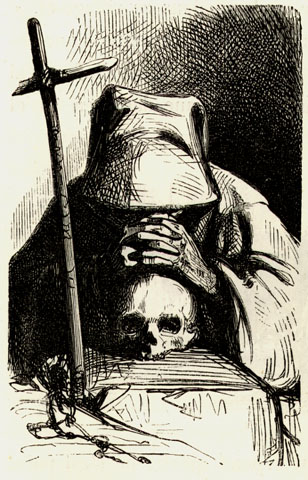
Here is something else to print, cut out, and paste into your BCP. You can make your Daily Office into an Office of the Dead by doing the following things. This can be used to pray for departed souls (e.g. immediately after they die, on the anniversaries of their deaths, regularly once a month for all your dead loved ones and acquaintances, etc.).

For priests: the Office of the Dead, when it was said, was said IN ADDITION to the Office of the Day. The complete Office of the Dead was: First Vespers, Mattins and Lauds, plus Mass of the Dead (requiem). Below are Matins and Evensong of the Dead, conforming to the outline of the Prayer Book Office. You might consider offering a Requiem Mass at your parish once a month, on the first unencumbered day, and also on that day the Office of the Dead. At one time clergy also said this office on Mondays during Advent and Lent.

This Office, more or less in this form (except, of course, Latin) is very ancient. This is evidenced not only by ancient references to it, but also by certain accretions present in the regular Daily Office, but missing from the Office of the Dead (such as confessions, absolutions, opening versicles, blessings, etc.). The Office pretty much in this form dates probably to around the 7th or 8th century, though it has antecedents going back to the second century, and perhaps even to the first.


The Confession, Absolution, and opening versicles are not said in the Office of the Dead, nor is "alleluia".

Instead of "Glory be to the Father...", there is said at the end of Psalms and Canticles:

Rest eternal * grant unto them, O Lord.
And let light perpetual * shine upon them.

AT MATTINS

Antiphon for the Invitatory [i.e. "O come, let us sing..."]:

The
King to whom all things live: * O come let us worship him.

[Antiphons are said before the Psalm, and again after it -- i.e. after saying "Rest eternal * grant..." at the end of each Psalm.]

Psalms with Antiphons as follows:

1st Psalm (Ps. 5): Make thy way plan, * O Lord, before my face.
2nd Psalm (Ps. 6): Turn thee, * O Lord, and deliver my soul: for in death no man remembereth thee.
3rd Psalm (Ps. 7): Lest he devour my soul * like a lion, and tear it in pieces, while there is none to help.

1st Lesson: Wisdom 4.7-end

1st Canticle: The Song of Hezekiah (Isa. 38.10-20) as follows:

Antiphon: From the gate of hell * deliver my soul, O Lord.

1 I said in the cutting off of my days, I shall go to the gates of the grave: * I am deprived of the residue of my years:
2 I said I shall not see the Lord, even the Lord, in the land of the living: * I shall behold man no more with the inhabitants of the world:
3 Mine age is departed, * and is now removed from me as a shepherd's tent:
4 I have cut off like a weaver my life: he will cut me off with pining sickness: * from day even to night wilt thou make an end of me.
5 I reckoned till morning, that as a lion so will he break all my bones: * from day even to night wilt thou make an end of me.
6 Like a crane or a swallow so did I chatter: * I did mourn as a dove.
7 Mine eyes fail with looking upward: * O LORD I am oppressed; undertake for me.
8 What shall I say? he hath both spoken unto me and himself hath done it: * I shall go softly all my years in the bitterness of my soul.
9 O LORD by these things men live, and in all these things is the life of my spirit: * so wilt thou recover me and make me to live.
10 Behold for peace I had great bitterness: but thou hast in love to my soul delivered it from the pit of corruption: * for thou hast cast all my sins behind thy back.
11 For the grave cannot praise thee, death cannot celebrate thee: * they that go down into the pit cannot hope for thy truth.
12 The living, the living, he shall praise thee as I do this day: * the father to the children shall make known thy truth.
13 The LORD was ready to save me: therefore we will sing my songs to the stringed instruments * all the days of our life in the house of the LORD.

Rest eternal * grant unto them, O Lord. And let light perpetual * shine upon them.

Antiphon: From the gate of hell * deliver my soul, O Lord.

2nd Lesson: 1 Cor. 15.35-end

Then is said:

V. I heard a voice from heaven, saying unto me.
R. Blessed are the dead which die in the lord.

Antiphon to Benedictus [i.e. "Blessed be the Lord God of Israel"]: I am * the resurrection and the life: he that believeth in me, though he were dead, yet shall he live; and whosoever liveth and believeth in me, shall never die.

The Apostles' Creed is not said.

Then is said kneeling:

Our Father, [and the rest silently until:]
V. And lead us not into temptation.
R. But delier us from evil.

The following Psalm is not said on the day of death or burial (but is said otherwise):

Psalm 130, concluding with "Rest eternal..."

Then is said:

V. From the gate of hell,
R. Deliver HIS SOUL, O Lord.
V. May HE rest in peace.
R. Amen.
V. The Lord be with you.
R. And with thy spirit.

Let us pray.

The most appropriate Collect, from among those following, is said:

1 Collect
Day of Burial
Absolve, we beseech thee, O Lord, the soul of thy servant (handmaid) N., that being dead unto the world HE may live unto thee: and whatsoever HE hath done amiss in his earthly life through the frailty of the flesh, do thou in the pitifulness of thy great goodness pardon and purge away. Through...

2 On the 3rd, 7th and 30th Days After Burial
We beseech thee, O Lord, that the soul of thy servant (handmaid) N., whose body three (seven, thirty) days since we did commit unto the ground, may be made partaker of the fellowship of thine elect; and that thou wouldest pour upon HIM the continual dew of thy mercy. Through...

3 On the Anniversary
O God, to whom alone belongeth the forgiveness of sins: grant, we pray thee, to the souls of thy servants (and handmaidens), the anniversary of whose burial we now commemorate, to find a place of refreshing, and the blessedness of thy rest, and to enjoy the glory of everlasting light. Through.

4 For a Bishop or Priest
O God, who didst cause thy servant, N. for whom we pray, to enjoy the office of bishop (priest) after the order of thine Apostles: grant unto him, we beseech thee; finally to rejoice in the company of those thy Saints in heaven whose ministry he did sometime share on earth. Through.

5 For Man Departed
Incline thine ear, O Lord, unto the prayers wherewith we humbly entreat thy mercy: that the soul of thy servant N., which thou hast bidden to depart this life, may by thee be set in the abode of peace and light, and made partaker of the eternal fellowship of thine elect. Through.

6 For a Woman Departed
We beseech thee, O Lord, of thy loving kindness to have mercy on the soul of thine handmaiden N. : that being purged from all defilements of our mortal nature, she may be restored to the portion of everlasting felicity. Through.

7 For Brethren, Kinsfolk and Benefactors
The second Collect under 9 below.

8 For Father and Mother
O God, who didst command thy people, saying, Honour thy father and thy mother: of thy loving kindness have mercy on the soul(s) of my father [and my mother], and forgive [them] all [their] sins; and I humble pray thee that thou wouldest grant unto me to behold [their] face(s) in the glory of everlasting felicity. Through.

For a Father only, or for a Mother only, the Collect is said as above with the changes necessary to make it read properly.

9 In the Office of the Dead through the Year
O God, who didst cause thy servants, for whom we pray, to enjoy the dignity of the priesthood, and some to be bishops after the order of thine Apostles: grant unto them, we beseech thee, finally to rejoice in the company of those thy Saints in heaven whose ministry they did sometime share on earth. Through.

or

O God, who desirest not the death of a sinner, but rather that all mankind should be saved: we beseech thee mercifully to grant that the brethren, kinsfolk and benefactors of our congregation who have passed out of this world, may by the intercession of blessed Mary ever Virgin and of all thy Saints come to enjoy with them everlasting blessedness.

or

O God, the Creator and Redeemer of all thy faithful people: grant unto the souls of thy servants and handmains the remission of all their sins: that as they have ever desired thy merciful pardon, so by the supplications of their brethren they may receive the same. Who livest.

10 For those who rest in a Cemetery
O God, in whose mercy do reset the souls of thy faithful people: mercifully grant to thy servants and handmaids, and to all that here and in all places do rest with Christ, the remission of all their sins; that, being delivered from every bond of iniquity, they may rejoice with thee in everlasting bliss. Through.

11 For many persons Departed
O God, whose nature and property is ever to have mercy and to forgive: have compassion on the souls of thy servants and handmaids and grant unto them the remission of all their sins; that, being delivered from the bonds of this our mortal nature, they may be found worthy to pass into everlasting life. Through.

12 Another Collect for Many Persons Departed
Grant, O Lord, we pray thee, to the souls of thy servants and handmaidens thy perpetual mercy: that as they have hoped and trusted in thee, so this their hope and faith may be profitable unto them to life everlasting. Through.

V. Rest eternal grant unto them, O Lord.
R. And let light perpetual shine upon them.
V. May they rest in peace.
R. Amen.


AT EVENSONG

Psalms with Antiphons as follows:

1st Psalm (Ps. 116): I will walk * before the lord in the land of the living.
2nd Psalm (Ps. 120): Woe is me, O Lord, * that I am constrained to dwell with Mesech.
3rd Psalm (Ps. 121): The Lord shall preserve thee * from all evil: yea, it is even he that shall keep thy soul.
4th Psalm (Ps. 130): If what is done amiss * thou wilt be extreme to mark, O Lord: O Lord, who may abide it?
5th Psalm (Ps. 138): Despise not, * O Lord, the works of thine own hands.

1st Lesson: Job 19.21-27

V. I heard a voice from heaven saying unto me.
R. Blessed are the dead which die in the Lord.

Antiphon to Magnificat: All * that the Father hath given me shall come to me: and him that cometh unto me, I will in no wise cast out.

2nd Lesson: 1 Thess. 4.13-end

Nun Dimittis is said without antiphon.

The Apostles Creed is not said.

Then is said kneeling:

Our Father, [and the rest silently until]
V. And lead us not into temptation.
R. But deliver us from evil.

The following is Psalm is not said on the day of death or burial (but is said otherwise).

Psalm 146 [concluding with "Rest eternal..."]

V. From the gate of hell,
R. Deliver HIS SOUL, O Lord.
V. May HE rest in peace.
R. Amen.
V. O Lord hear my prayer.
R. And let my cry come unto thee.
V. The Lord be with you.
R. And with thy spirit.

Let us pray.

Collect and conclusion as at Mattins.

Friday, June 08, 2007

take. eat.

The sacrifice of the God-man, Jesus Christ, in its radical self-referentiality refuses to permit itself to be objectified in anything like a sense-empirical transaction, nor even in intellectualization. Instead it draws the independent subjectivity of the beholder into itself. As death, it kills those who witness it. The epistemological free agent is incapable of resisting its radical compulsion, and is thus incapable of remaining epistemologically free. The Cross transforms those who would circumscribe it in thought, word, or deed. All things pass away in the theanthropic sacrifice, and all things are made new in the theanthropic resurrection. What the Cross compels, therefore, is a participation in itself. The Cross is a calling to itself; it is the true and universal human vocation. (Pseudo) Dionysius the Areopagite speaks in the following way of God the Son, in his singular Gift: “Through an excess of loving goodness He transcends Himself, and descends to dwell in all things by virtue of the ecstatic power beyond all being that comes forth from Himself,” (The Divine Names, 4.13). It is therefore not in an awesome display of what we have come to call “power” that the glory of God is revealed. (Our conceptualizations themselves must be reconfigured, born again.) Just as the divine Gift is entirely gratuitous, though it cannot be withstood; so the Power and the Glory, though incapable of being resisted, are themselves manifested in their Bearer having been entirely overcome and emptied. The Greek Orthodox theologian Archimandrite Vasileios, abbot of the Athonite monastery Stavronikita, puts it this way: “…We see the glory of God, not in the form of the Pantokrator, but revealed as it appears in the act of the Father’s offering and sacrifice of the Son: in the ultimate humiliation of the Servant of God,” (Hymn of Entry, 58).

The radical nature of this Gift is further radicalized in that it is supratemporalized, manifest as such in the liturgical sacrifice of the Eucharist. That is, the Gift gives itself supratemporally on thousands of altars through the millennia, and around the world. In the catholic identification of the consecrated Eucharistic elements with the flesh of the God-man, that is with the very substantiality of the Gift, Christ is “offered to us, broken and poured out,” (Hymn of Entry, 59). The economics of sacrifice thereby become altogether one-sided. It isn’t just that Christ is given to us; it isn’t just that he is given to us broken and poured out. The sacrificial Gift of Christ is his own flesh as food, his own blood as drink. It is given as that which is taken, in the fullest possible sense; rather, that which is not merely taken, but taken and consumed. The Gift is radically appropriated by the recipient. It is internalized in the fullest sense, and in being internalized, it internalizes the recipient. Christ enters substantially into the communicant and thus brings him, in turn, into the divine economy, into the very heart of the paschal mystery. The compulsion of the sacrificial Gift manifests itself in being consumed, and in consuming the consumer. “Out of the eater came something to eat, out of the strong came something sweet,” (Judges 14.14). The experiential subject of the divine Sacrifice becomes its object, he is appropriated by the Sacrifice, and becomes the sacrificial victim in union with the Lamb, eternally offered before the throne of the Father.

It becomes clear in what sense the pure gift is beyond the horizon of expectation. The fetishized pure gift is only capable of being offered by a god. It only occurs in myth. In every case of thematized, temporal giving or sacrifice, the do ut des of paganism, the Derridean concern obtains. The gift is cancelled out by the expectation of reciprocity. It becomes, as soon as it is given and recognized, a market transaction, an exchange, and as such, a non-gift. But insofar as the pure gift only occurs in myth, insofar as it is only capable of being offered by the god, it does occur in the Christ myth. And because the holy sacrifice is God offering God, it is actual, and therefore possible. Because the sacrificial Gift is a gift of the theanthropic, of that which is very God and very man, it is capable of bridging the ontological, conceptual, and linguistic gap between the Giver and the receiver. It does so by bringing the recipient into the heart of the Gift, by transforming the receiver into that which is offered, into the Gift itself.

What is necessary is not so much a demythologizing of the event, but rather a mythologizing. It must be removed from the realm of the scientific, of the sociological. The mythologization occurs on two levels, both of which constitute instances of the signification of the Gift. First there is the pure gift itself, the sacrifice of the flesh of God which, as has been noted, is entirely self-referential. It is beyond the pale of predication and conceptual circumscription. The experiencing subject stands before the Gift on the Gift’s own terms. In terms of signifier and signified, the two are one. The signifier is that which it signifies. And the same instance of self-referentiality takes place again in the liturgical action of the Eucharist. In the Eucharist, the gift is disbursed. The Eucharistic elements serve as a prism, for the refraction of the divine ενέργεια. In the sacrifice, thanksgiving (ευχαριστία) is offered to God for the sacrifice itself and for the totality of divine Grace. Bread and wine are offered as symbols of our own categorical creative initiatives, as return-gifts. The offerers of the sacrifice are themselves offered in their totality, body and soul. And most fundamentally, the Eucharistic sacrifice is the Gift of God, the divine flesh offered in virtue of the sacerdotal grace of the officiant, acting in persona Christi. Therefore, it is the same Gift as that of which it is a signifier, and that which it signifies. By being at once signifier and signified, the sacrifice manifests its power of compulsion. As referend, it is beyond the horizon of expectation, utterly mythologized; yet as the term of reference, it draws itself into the economy of the same, is thematized in the realm of the categorical and becomes itself an object of experience.

Sunday, April 22, 2007

a question for those of you who pray the daily office (or anyone really)

Do you have a way to order your daily intentions? I.e. is there a system to your intercessory prayer? If so what is it? I.e. do you pray for family on Monday, clergy on Tuesday, heretics on Wednesday, the sick and suffering on Thursday, the dead on Friday, etc. etc.? How do you do it?

And a more general question: what is your daily prayer discipline? I'll tell you mine. Its straight-forward: Daily Morning and Evening Prayer (1662) (Coverdale Psalter), with the ECUSA 1979 Propers (lectionary, collects, etc.), the whole thing enriched with antiphons (from the English Office -- link in sidebar), and the Final Anthems of the BVM. Once a week or so I'll say the Litany of the Sacred Heart or something like that. Very occasionally I'll say the Rosary.

The reason I ask the first question is that I've never developed a system for intercession, so it remains sporadic and piecemeal. I have a kind of litany of proper names for whom I intercede (though not at every office). I feel the need for more order to my intercessions.

Sunday, April 08, 2007

the holy father's easter message

Its very good. Read it all here. The theme is actually the same as my Easter sermon: This Jesus, who was crucfied, who forever bears the marks of his suffering, and who shows his wounds to us, is risen.

We may all be tempted by the disbelief of Thomas. Suffering, evil, injustice, death, especially when it strikes the innocent such as children who are victims of war and terrorism, of sickness and hunger, does not all of this put our faith to the test? Paradoxically the disbelief of Thomas is most valuable to us in these cases because it helps to purify all false concepts of God and leads us to discover his true face: the face of a God who, in Christ, has taken upon himself the wounds of injured humanity. Thomas has received from the Lord, and has in turn transmitted to the Church, the gift of a faith put to the test by the passion and death of Jesus and confirmed by meeting him risen. His faith was almost dead but was born again thanks to his touching the wounds of Christ, those wounds that the Risen One did not hide but showed, and continues to point out to us in the trials and sufferings of every human being.

....

In fact, by his rising the Lord has not taken away suffering and evil from the world but has vanquished them at their roots by the superabundance of his grace. He has countered the arrogance of evil with the supremacy of his love. He has left us the love that does not fear death, as the way to peace and joy.

alleluia! alleulia! alleluia!


Happy Easter! At my parish, during the Great Vigil, we blessed the Baptismal Water in the old manner, a la the missal. Here is what was sung by candle-light, amid thick clouds of incense. It was downright emergent:


As the Procession approaches the font, the choir will sing the Canticle: Like as the hart desireth the water brooks.


Celebrant Almighty and everlasting god, mercifully look upon the devout prayer of this people called to a new birth, who, like the hart, seek the fountain of your waters: and mercifully grant that the thirst of their faith may, by the mystery of baptism, sanctify them in body and soul.

People Amen.

Celebrant Almighty and everlasting God, be preset at the mysteries, be present at the sacraments of your great goodness: and send forth the spirit of adoption for the regeneration of the new peoples whom the font of baptism brings forth unto you; that this office and ministry of your unworthy servants may be effectually fulfilled by your power. Through Jesus Christ your Son our Lord, who lives and reigns with you in the unity of the Holy Spirit, God. Throughout all ages world without end. Amen.

Celebrant The Lord be with you.
People And also with you.
Celebrant Lift up your hearts.
People We lift them up unto the Lord.
Celebrant Let us give thanks to the Lord our God.
People It is right to give him thanks and praise.

Celebrant It is right, and a good and joyful thing, always and everywhere to give thanks to you, O Lord, holy Father, almighty everlasting God: who by your invisible power wondrously gives effect to the work of your sacraments. And though we are unworthy to perform mysteries so great: yet you do not leave us destitute of the gifts of your grace, but mercifully incline your ears even unto these our supplications. O God, whose Spirit in the first beginnings of the world moved over the waters: that even then the nature of water might conceive the virtue of sanctification. O God, who washed away in the waters the iniquities of a sinful world, and even in the outpouring of the flood showed forth in a figure our regeneration: that by the mystery of this same element there should be an end to sin and likewise a beginning of virtue. Look, O Lord, upon the face of your Church, and multiply in her the power of your regeneration: for you make glad your city by the streams of your abundant grace, and open the fount of baptism throughout the whole world for the renewing of the nations: that by the command of your majesty she may receive from the Holy Spirit the grace of your only-begotten Son.

(Dividing the water in the form of a cross) May he, by the secret mingling of his divine power, make fruitful this water prepared for the regeneration of mankind: that having received sanctification and being born again a new creature, there may come forth an offspring of heaven from the spotless womb of this divine fountain; that all, whether sex divide them in body, or age in time, may alike be brought forth into one childhood by grace, their mother. Far hence, O Lord, at your command let every unclean spirit depart: far hence be all the wickedness of the craft of the devil. Let no power of the enemy here have place or portion: let it neither ensnare nor encompass us: let it not waylay us in secret: let it not taint us with corruption.

May this holy and undefiled creature be free from every assault of the enemy, and purified by the departure of all iniquity. May it be a living fountain of regenerative water, a purifying stream: that all who shall be washed in this laver of salvation may, by the operation of the Holy Spirit within them, obtain the grace of perfect purification.

(Making three crosses over the water) Wherefore I bless you, O creature of water, by the living + God, by the true + God, by the holy + God; by God who in the beginning through his word divided you from the dry land: whose Spirit moved over your surface (he scatters the water with his hand towards the four quarters of the world) who made you to flow from the fountain of paradise, and commanded you to water the whole earth with your four rivers; who in the desert bestowed upon you sweetness when you were bitter, that men might drink; and brought you forth from the rock for the thirsting people. I bless you also by Jesus Christ his only Son, our Lord, who in Cana of Galilee by a wondrous miracle changed you through his power into wine; who walked upon you with his feet; and was baptized in you by John in the Jordan; who brought you forth together with blood from his side; and commanded his disciples that believing, they should be baptized in you, saying, “Go and teach all nations, baptizing them in the name of the Father, and of the Son, and of the Holy Spirit.” Almighty God, mercifully assist our prayer who keep these your commandments: graciously breathe upon us. (He breathes three times on the water in the form of a cross) Bless with your word and power this element of water, that, as by nature it has power to cleanse and wash the body, so also it may be effectual for the purifying of the soul. (He lowers the Paschal Candle three times into the water.)

May the power of the Holy Spirit descend upon the fullness of this font.

May the power of the Holy Spirit descend upon the fullness of this font.

May the power of the Holy Spirit descend upon the fullness of this font and make the whole substance of this water to be fruitful unto regeneration. Here may the stains of every sin be blotted out; here may nature, created in your image, be restored to the honor of its first estate, that every man who comes to this sacrament of regeneration may be born again unto the new childhood of true innocence. Through Jesus Christ your Son, our Lord, who shall come to judge the quick and the dead, and the world by fire.

People Amen.

Celebrant (Pouring in the Oil of Catechumens) May this font be sanctified and made fruitful by the Oil of salvation, for such as shall be born again from it, unto life everlasting.

People Amen.

Celebrant (Pouring in the Chrism) May this inpouring of the Chrism of our Lord Jesus Christ, and of the Holy spirit, the Paraclete, be wrought in the name of the Holy Trinity.

People Amen.

Celebrant (Pouring in both Oils together) May this commingling of the Chrism of sanctification and of the Oil of unction, and of the water of baptism, be likewise wrought in the name of the father, and of the Son, and of the Holy Spirit.

People Amen.

Friday, April 06, 2007

i hope you are having a penitential triduum


O all ye who passe by, behold and see
;

Man stole the fruit, but I must climbe the tree;
The tree of life to all, but onely me:
Was ever grief like mine?

Lo, here I hang, charg’d with a world of sinne,
The greater world o’ th’ two; for that came in
By words, but this by sorrow I must win:
Was ever grief like mine?

Such sorrow as, if sinfull man could feel,
Or feel his part, he would not cease to kneel.
Till all were melted, though he were all steel:
Was ever grief like mine?

But, O my God, my God! why leav’st thou me,
The sonne, in whom thou dost delight to be?
My God, my God ------
Never was grief like mine.

Shame tears my soul, my bodie many a wound;
Sharp nails pierce this, but sharper that confound;
Reproches, which are free, while I am bound.
Was ever grief like mine?

Now heal thy self, Physician; now come down.
Alas! I did so, when I left my crown
And fathers smile for you, to feel his frown:
Was ever grief like mine?

In healing not my self, there doth consist
All that salvation, which ye now resist;
Your safetie in my sicknesse doth subsist:
Was ever grief like mine?

Betwixt two theeves I spend my utmost breath,
As he that for some robberie suffereth.
Alas! what have I stollen from you? Death.
Was ever grief like mine?

A king my title is, prefixt on high;
Yet by my subjects am condemn’d to die
A servile death in servile companie:
Was ever grief like mine?

They give me vineger mingled with gall,
But more with malice: yet, when they did call,
With Manna, Angels food, I fed them all:
Was ever grief like mine?

They part my garments, and by lot dispose
My coat, the type of love, which once cur’d those
Who sought for help, never malicious foes:
Was ever grief like mine?

Nay, after death their spite shall further go;
For they will pierce my side, I full well know;
That as sinne came, so Sacraments might flow:
Was ever grief like mine?

But now I die; now all is finished.
My wo, mans weal: and now I bow my head.
Onely let others say, when I am dead,
Never was grief like mine.

-- From
The Sacrifice by George Herbert
(Read the whole thing here.)

Monday, March 26, 2007

behold the handmaid of the lord: happy annunciation


Hail Mary, full of grace, the Lord is with thee. Blessed art thou among women, and blessed is the fruit of thy womb, Jesus. Holy Mary, Mother of God, pray for us sinners, now and at the hour of our death. Amen.

Wednesday, March 07, 2007

on confessions and penance

From Arturo Vasquez. Scroll down past the Lope de Vega and Longfellow poems. Not sure I agree with him entirely, in the end. But he writes beautifully, convincingly, and anyway I'm at least 90% on board. I guess the point is: its beautiful.

Wednesday, February 28, 2007

on serving at the altar

....

Having served hundreds and hundreds of low Masses, sung Masses, Solemn High Masses, etc., I can say that they have changed me as a human being. And I only learned to serve when I was twenty-one. When you serve in the old rite, you have to take on another persona. It is the most self-emptying and transformative experience you can go through, at least if you take it seriously. The way I was taught, you always have your hands folded, you always look down, each step is subtle and measured, and all movements are supposed to be slow and elegant. When you are before the throne of God, you should act like it. This act grafts you into the continuous worship of God that has gone on since before time began, as it goes on in heaven continuously, and as our ancestors prayed before us. This is the ultimate democracy of the dead (to quote Chesterton): that we should continue to worship as they did, emptying ourselves of our own modern ideas of how worship and religion should be.

Liturgy is gravely serious business, but the paradox is that this is what makes it so fun. Children will often behave like angels for their parents because they know that their parents like it that way. They may be little devils most of the time, but when they know they should behave, they can do it on cue and earn even more appreciation from their parents for their efforts. This is how I feel when I serve Mass. Yes, I am a dissipated, foul-mouthed, hypocritical, uncouth runaway ex-monk. But at least I can be angelic in front of God for twenty five minutes on a Wednesday evening. It is my way of trying to show God that I might not be such a terrible scoundrel after all. It is my poor attempt at the widow’s mite.

And when it is done right, when it is true rational service mixed with humility and bodily motion, a low Mass can be even more beautiful than a starry sky, a craggy sea shore, or a snow covered mountain that shoots up into the clouds. This is what we are here for, it is our eternal vocation: to serve, to dance, and to be joyful before the throne of the Lamb. Ecce Agnus Dei…..

Read it all here.

Saturday, February 24, 2007

religion: the hourly regimen of prayers that monks have followed for centuries is spreading beyond monasteries

From St. Benedict's Parish website.

By John Rivera
Baltimore Sun Staff

*O Lord, open my lips

And my mouth shall declare your praise. *

For centuries, monks have mouthed these words as they begin their daily
regimen of prayer in the pre-dawn hours. The Liturgy of the Hours --
Psalms and prayers recited at set hours -- fixed the rhythm of their
day, from rising to rest.

Also called the Divine Office, the prayers have for the most part been
the preserve of Roman Catholic priests, deacons, nuns and brothers.

But the Office is being discovered by Catholic lay people, such as those
who gather every day for Morning Prayer at St. Clement Mary Hofbauer
parish in Rosedale, or for Evening Prayer at * St. Benedict parish* in
Southwest Baltimore.

Protestants say they, too, are finding spiritual inspiration in coming
together -- or in seeking solitude -- to recite the prayers known by
Latin titles such as Lauds, Vespers or Compline.

For the average person, picking up a breviary, the prayerbook used in
the Office, is a daunting experience. A half dozen colored ribbons mark
the sections one must flip between during the prayer's various parts.

In response to the increasing popularity of the Divine Office, about a
half dozen books have recently been published or are soon to hit print.
The cyber world is weighing in, too, with such Internet sites as
http://www.liturgyhours.org and http://www.universalis.com springing up.

"I think there is a clear need, there's a hunger for Christian
spirituality, Christian spiritual discipline," said Phyllis Tickle, the
Publisher's Weekly religion editor who is compiling her own breviary,
"The Divine Hours." Her first volume, "Prayers for Summertime," was
released last month.

"We've gone from the ooey gooey to the importing to Christianity of
disciplines from other faiths," said Tickle, whose watch alarm reminds
her three times a day to pick up her prayer book. "Now, we have stumbled
on the fact that some Christians would like to know what their spiritual
traditions are."

Bonnie Shannonhouse has been traveling the world for six years to teach
the Liturgy of the Hours to Protestant women -- Anglicans like herself,
but also mainline Protestants, evangelicals, Pentecostals and
charismatics.

"When I discovered [the Hours], it pained me that the Protestants threw
the baby out with the bath water at the Reformation," said Shannonhouse
of North Baltimore.

She has written two versions of the Hours for lay people, which she
calls "The Lost Coin" series, after Jesus' parable in the Gospels about
the person who rejoices on a precious find. The Hours offer a bridge
between what she calls the liturgical churches, such as Catholics and
Anglicans, and the non-liturgical, evangelical Christians.

"We've lost a spiritual coin in our Christian hearts, and we rejoice
because it is now found," she said. "It's breaking down barriers and
prejudices and hatreds that have existed for the last 500 years."

Robert Benson, who was raised in the Nazarene Church, later became a
Methodist and now worships as an Episcopalian, has prayed the Hours
since he was introduced to them a decade ago.

"Because of my evangelical background, all I knew about prayer was the
kind of extemporaneous, conversational prayer that's most common, almost
exclusively used in evangelical settings," said Benson, who has written
his own simplified Office, "Venite, a Book of Daily Prayer."

"I didn't know anything about corporate prayer, daily prayer, monastic
prayer," he said. "This was prayer that was not dependent on my
eloquence or my spiritual depth at a given point in time. It required
simply faithfulness, not always an easy thing to do."

The benefit to praying at fixed hours is that "it keeps our focus on God
during the day," said Etta Patton, who says morning prayer at St.
Clement Mary Hofbauer and evening prayer by herself. "You take that time
to stop the busyness of the day, all the distractions."

The practice of the Office is rooted in the Jewish tradition of fixed
hours of prayer and receives its Christian inspiration from St. Paul's
admonition to "pray without ceasing."

By the fourth century, monastic communities had set apart specific parts
of the day for prayer, and between the fifth and the ninth centuries,
the Office developed its form of eight hours: Matins and Lauds in the
early morning; the Little Hours during the day of Prime (the first hour,
before dawn); Terce (the third hour, 9 a.m.), Sext (the sixth hour,
noon) and None (the ninth hour, 3 p.m.); and the evening and night
prayers of Vespers and Compline.

Though monks can devote their entire day to prayer, the Christian in the
world usually chooses a portion of the Office: just morning prayer or
Vespers, or maybe just the Little Hours of Terce, Sext and None (Prime
has been dropped).

Although the Office can include prayers, hymns and religious readings,
the recitation of the Psalms is at its heart. They are recited or sung
and are done in an antiphonal style, with one side of the congregation
taking one strophe or stanza while the other listens, and then reversing
roles.

Dale Dombrosky discovered the Office when she stopped at * St. Benedict's*
in 1990. "I was going through a particularly hard time in my life, and
the Psalms really spoke to me. Sometimes, they express praise, sometimes
petition, sometimes anger. It's like a real conversation with God," she
said.

"To me, this was a healing for me, to be able to speak to the Lord like
that," she said. "That's how I came back to the church. Really, the
Liturgy of the Hours has been a saving prayer for me."

Many who recite the Office have a sense of participating in a cosmic
wave of prayer. "It's not just us here. People around the world are
saying these same prayers," said Nancy Cappellini, who often drives from
her Owings Mills home to morning prayer at St. Clement Mary Hofbauer in
Rosedale.

"You feel like you're in union with the whole church."

Originally published on Apr 12 2000

Thursday, February 22, 2007

an even better one!

Here is the link. Note how Lectio Divina is not some weird mystical nonsense having to do with Labyrinths or "Celtic spirituality".

Tuesday, February 20, 2007


Tomorrow is the beginning of Lent. Prepare. To help you, here are two of my old posts about keeping a holy Lent. I haven't got a lot to add to them. Looking at the blog-o-meter, it seems that a lot of people have been visiting these two pages in the last month or so. I commend them to your attention, and hope you find them helpful.

Keeping a Holy Lent Part One: Theory

Keeping a Holy Lent Part Two: Practice

Wednesday, February 14, 2007

the blessed virgin mary and the primates meeting


Read Jill Woodliff's meditation here. An excerpt:

She who believed that Jesus would inherit the throne of David stayed at the foot of the cross. She who believed that He would reign over the house of Jacob forever stayed at the foot of the cross. She who believed that His kingdom would have no end stayed at the foot of the cross.

She gave birth, remaining a virgin. She watched the end, believing in no end.

Amen. If we resolve to wait and adore at the foot of the cross and we think the Mother of God doesn't wait and adore with us, then we are either blind or dishonest . "Behold your Mother!" Take her into your own home (John 19.26).

May we see Jesus through her eyes.

Holy Mother of God, pray for us sinners!

Wednesday, February 07, 2007

adrienne von speyr...


...was a Swiss physician, mystic, and friend of Hans Urs von Balthasar, who saw von Speyr's life of prayer and suffering to be in some sense a formal key to his theology. Read about von Speyr's life here.

Von Balthasar wrote that shortly after her conversion, "a veritable cataract of mystical graces poured over Adrienne in a seemingly chaotic storm that whirled her in all directions at once. Graces in prayer above all: she was transported beyond all vocal prayer or self-directed meditation upon in order to be set down somewhere after an indeterminate time with new understanding, new love and new resolutions." This included "an increasingly open and intimate association with Mary…" Driving home one night shortly after her conversion, she saw a great light in front of the car and she heard a voice say: Tu vivra au ciel et sur lat terre (You shall live in heaven and on earth). This was "the key to all that was to follow" in her life.

Thursday, January 25, 2007

more prayers to cut out and put in your bcp


Under the heading: Devotions for the Holy Eucharist. My advice is to put these in your BCP, bring them to Mass with you, and pray them as you wait to come forward to receive the Sacrament.

Act of Faith

Of a truth I firmly believe, O good Jesu, and with lively faith confess, that thou thyself, equal to God the Father in glory and in power, true God and Man, art verily and indeed present in the Sacrament. For thou, the Very Truth Itself, hast said, This is my Body, This is my Blood. I believe whatever the Son of God hath said. Nothing can be truer than this word of him who is the Truth. Lord, I believe, help thou mine unbelief, increase my faith.

Act of Hope

O Christ Jesus, I am sinful dust and ashes, but thou callest to thee them that labour and are heavy laden, that thou mayest refresh them. Art not thou my Refuge? To whom else should I go? Thou alone hast the words of eternal life, thou alone canst comfort me in every trouble. Lord, I am weak and sick, but thou art my Salvation. They that are whole need not a physician, but they that are sick. Therefore I come to thee, my Physician and my Refuge, hoping that this Communion may be to me the increase of Faith, Hope, and Charity; a firm defence againsat the snares of my enemies; a help to the removal of the fault and defect of . . . and to the bringing forth of works well-pleasing unto thee, especially . . . and a pledge of future glory. This is the hope and desire which I cherish in my heart, for thou art pitiful and of tender mercy, and in all thy promises most faithful.

Act of Love

O most sweet Saviour, Jesus Christ, how great was thy love, which drew thee from the bosom of the Father to this vale of tears, to take our flesh, and endure infinite miseries and wrongs, yea, even the death of the Cross, and that only for us miserable sinners, and for our salvation. O how great was thy love? Thou mightest have condemned us, and thou didst rather choose to save us: we were guilty, and thou, the Sinless One, didst endure our punishment to set us free.

Out of love it was that thou camest down to save our flesh; and when about to depart from this world to the Father, thou didst leave to us this Sacrament as a pledge of thy love; that after a new and wondrous manner, thou mightest abide with us for ever; thou, whose delights are to be with the sons of men.

O Lord, how worthy art thou of love, who dost so much for love of us! Wherefore I will love thee, O Lord, my Strength, my Refuge, and my Deliverer.

O God, thou art very Love! He that dwelleth in love dwelleth in thee, I desire to receive thee in this Sacrament, that I may be more firmly united with thee in the bond of love. Who shall separate me from the love of Christ my Saviour? O that neither life, nor death, nor any creature, may have power to do so.

Saturday, January 06, 2007

the epiphany


Why, impous Herod, shouldst thou fear
Because the Christ is come so near?
He who doth heavenly kingdoms grant
Thine earthly realm can never want.

Lo, Sages from the east are gone
To where the star hath newly shone;
And on by light to Light they press,
And by their gifts their God confess.

The Lamb of God is manifest
Again in Jordan's water blest,
And he who sin had never known
By washing hath our sins undone.

Yet he that ruleth everything
Can change the nature of the spring,
And gives at Cana this for sign:
The water reddens into wine.

Then glory, Lord, to thee we pay
For thine Epiphany to-day;
All glory through eternity
To Father, Son, and Spirit be. Amen.

V. O worship the Lord, alleluia.
R. All ye Angels of his, alleluia.

To-day to her heavenly Bridegroom is the Church espoused, forasmuch as in Jordan Christ hath washed away her iniquities; Sages with their offerings hasten to the royal marriage; and with water turned to wine the guests are regaled, alleluia.

Wednesday, June 21, 2006

litany of the sacred heart of jesus


I'm moving this back to the top. I ask you to pray it, and ask the Lord to strengthen the faithful, especially the bishops. Ask him to put to flight heresy and schism.

This seems very appropriate. MM reminded me tonight of something very simple, but easily overlooked: to pray. All of you bloggers and blog readers: we are called to do more than eagerly follow the news of our Communion. We are called to pray and to love. Love and pray for those about whom you read and write. I'm serious. Here's a place to start. Take a few minutes and say this litany with a special intention for some or all of the following: the end of General Convention, against heresy and schism, for the Anglican Communion, for priests, (especially) for the Archbishop of Canterbury, for the persecuted faithful, for deputies, for all bishops, for conversion of heart, for gays, lesbians, and transgendered people, for the Network, for the bishops and dioceses of Fort Worth, San Joaquin, and Quincy, for the primates, for your own bishop, for your rector and those priests and deacons who serve you.

V. Lord, have mercy on us.
R. Christ, have mercy on us.
V. Lord, have mercy on us. Christ, hear us.
R. Christ, graciously hear us.
V. God the Father of Heaven, have mercy on us.
God the Son, Redeemer of the world, have mercy on us.
God the Holy Spirit, have mercy on us.
Holy Trinity, one God, have mercy on us.
Heart of Jesus, Son of the Eternal Father, have mercy on us.
Heart of Jesus, formed by the Holy Spirit in the Virgin Mother's womb, [etc.]
Heart of Jesus, substantially united to the Word of God.
Heart of Jesus, of infinite majesty.
Heart of Jesus, holy temple of God.
Heart of Jesus, tabernacle of the Most High.
Heart of Jesus, house of God and gate of heaven.
Heart of Jesus, glowing furnace of charity.
Heart of Jesus, vessel of justice and love.
Heart of Jesus, full of goodness and love.
Heart of Jesus, abyss of all virtues.
Heart of Jesus, most worthy of all praise.
Heart of Jesus, King and center of all hearts.
Heart of Jesus, in whom are all the treasures of wisdom and knowledge.
Heart of Jesus, in whom dwells all the fullness of the Godhead.
Heart of Jesus, in whom the Father was well pleased.
Heart of Jesus, of whose fullness we have all received.
Heart of Jesus, desire of the everlasting hills.
Heart of Jesus, patient and rich in mercy.
Heart of Jesus, rich to all who call upon You.
Heart of Jesus, fount of life and holiness.
Heart of Jesus, propitiation for our offenses.
Heart of Jesus, overwhelmed with reproaches.
Heart of Jesus, bruised for our iniquities.
Heart of Jesus, obedient even unto death.
Heart of Jesus, pierced with a lance.
Heart of Jesus, source of all consolation.
Heart of Jesus, our life and resurrection.
Heart of Jesus, our peace and reconciliation.
Heart of Jesus, victim for our sins.
Heart of Jesus, salvation of those who hope in You.
Heart of Jesus, hope of those who die in You.
Heart of Jesus, delight of all saints.

V. Lamb of God, who takest away the sins of the world,
R. spare us, O Lord.
V. Lamb of God, who takest away the sins of the world,
R. graciously hear us, O Lord.
V. Lamb of God, who takest away the sins of the world,
R. have mercy on us.

V. Jesus, meek and humble of Heart,
R. Make our hearts like unto Thine.

Let us pray.

Almighty and eternal God, look upon the Heart of Thy most beloved Son and upon the praises and satisfaction which He offers Thee in the name of sinners; and to those who implore Thy mercy, in Thy great goodness, grant forgiveness in the name of the same Jesus Christ, Thy Son, who livest and reignest with Thee forever and ever. Amen.

Thursday, March 02, 2006

keeping a holy lent -- part ii: practice


Lent is for the purpose of our growth in grace and in the knowledge of the Lord Jesus (2 Peter 3.18). Always keep this in mind. Lent isn’t about the disciplines. The disciplines serve the end of intimacy and communion with the Lord. The discipline is about driving the detritus of sin and distraction out of your heart and thereby making room for grace. So don’t forget that the whole point of Lent is growing in grace and knowledge of the Lord.

There are traditionally five Lenten tools for growing in grace and knowledge of the Lord:

1) Retirement
2) Prayer
3) Fasting
4) Repentance
5) Almsgiving

Retirement serves prayer. Go into your closet and shut the door and pray in secret (Matthew 6.6). It may seem silly even to mention, but nevertheless: it is a great help actually to remember to set aside time every day, preferably in the morning and in the evening, to be by yourself with God. This means going into your bedroom, or some place where you can be undisturbed and alone, closing the door, and praying.

Fasting, again, serves the end of growth in knowledge and love of the Lord. Let’s be honest: one aspect of life in time and space, an aspect, in other words, of being a human in the world, is that we are surrounded by all kinds of other created things. And those things are not bad. We don’t need to go far in the world, though, before we run into trouble. We are after growing in knowledge of the Lord. But we humans get easily overwhelmed by STUFF. And knowledge of STUFF can (and does) distract us from knowledge of the Creator of Stuff. Because our intellects are finite, we cannot hold everything there at once. And the danger is that we forget God by constantly remembering this and that. This is what St. Paul was talking about when he said of those whose minds became darkened that they changed the truth about God into a lie and served the creature rather than the creator (Romans 1.25). The great danger is that we become so attached to the STUFF around us that it becomes our master and our god. Then we are no better than pagan idolaters.

The provenance of idolatry is not pagan antiquity. It is life in space and time. Idolatry is just as much a danger to the 21st century Christian. And this is the point of fasting. We force STUFF out of our lives (whether it be food or television or whatever), and thereby create a space in our consciousness for the grace of God. Let’s face it: while you are gratifying your appetite (whether it be by eating another donut or by watching MTV), you are not praying. That’s a fact.

Repentance is our acknowledgement before God of the above facts: that we HAVE forgotten him, over and over and over again. And one of the chief avenues of our forgetfulness of him is the gratifying of our sinful appetites. We serve the creature rather than the creator, and we do it over and over again, every day, year in, year out. And the fact that our very existence in this world is geared toward this forgetfulness, that the deck is stacked against us because we are surrounded by so many tantalizing distractions, and in some cases we are even genetically predisposed to acquiesce to them (think of alcoholism) -- this fact is original sin: those things about the world which, through no fault of our own, nevertheless seek to trap us and mire us down in sin. This is the fallenness of the world, and we sin without even realizing it. So once we have fasted, forced some particular attachment out of our lives and out of our consciousness, and once we have gone into our room and shut the door, and once we have spoken to God in prayer, it is time to acknowledge our situation to him. This is repentance. To come to God on his own terms, to acknowledge what he knows too well: quia peccavi, that I have sinned.

Almsgiving is about our being not merely a repository of God’s grace, but also its conduit. Think in this regard of the Blessed Virgin. She was indeed “full of grace” (Luke 1.28). But though the grace of God most certainly flowed into Mary it did not merely pool up inside of her. It was not just for her benefit. It was given to her and stayed with her in an intimate and exclusive way for nine months, but then (O then!) it issued forth from her. Then it was given to the world in the most ecstatic and total way. The grace of God flowed through Mary; and some thirty-three years after flowing through her, it was poured out utterly for the sins of the whole world (1 John 2.2).

So once you have made a space in your heart for God’s grace, through retirement, prayer, fasting, and repentance, do something for others. Share something of what God has given you -- and he has given you everything you have -- with your fellow creatures, that they might come to grow in grace and the knowledge of the Lord as you have -- and you have.

Monday, February 27, 2006

keeping a holy lent -- part i: theory


What is Lent for?

Lent is instituted in the Church that we may “grow in grace and in the knowledge of our Lord and Savior, Jesus Christ” (2 Peter 3.18).

Contrary to superficial appearance, Lent is therefore not a sorrowful time. It is a time of Joy. The word “Lent” comes from the Anglo-Saxon word for Springtime. The season of Lent is a time, while beginning with the darkness and rain of penitence and self-denial, yet ending with the full flowering of Easter morning.

It is important to remember, therefore, the Joy of what George Herbert called the “feast of Lent,” because it is a time of spiritual joy. It is an opportunity to engage with the enemy, to subdue him in those things which keep us from the grace of God. In one of those reversals typical of our religion: the outward fast is an inward feast; the outward continence is inward and ecstatic intercourse with the Bridegroom.

Father Congreve, SSJE, in the 19th century compared the joy and hope of Lent to the joy and hope of an army which rounds a bend in the road and sees for the first time the battle lines of the enemy arrayed in front of it. It is a heady hope, tempered perhaps by the realization of what actually is at stake, but a hope and a joy no less for that.

“But Lent rallies us, reminds us of the seriousness of our moral life, of the reality of sin, of bad tendencies of our childhood not conquered yet, of the strength of sins of the flesh, of pride and temper, of love of the world, of cowardice in confessing Christ, of sloth and depression, of neglect of prayer and the sacraments. As we look up, Lent shows us the way to God and our heavenly country, and right across that way, cutting off our road to God and holiness, lies our sin. So Lent brings us to face the enemy and prepare for battle. And hope is the very soul of a battle: the men intend to win that position now held by the enemy at any cost. So in your case, suppose there is sloth, or unbelief, or ill will, or some other vice: your Lent battle means your hope to wrest that position from the enemy. That sin, that indifference, or bad temper, shall be conquered by God’s help. There is no evading the issue; that sin is going to conquer me, and separate me from God for ever, or I am going to conquer it.”

So too, a great part of the joy of Lent is the realization, upon beholding the sin lying between us and God, separating us from Him, is the force of the realization that we are not our sin. Sin is no part of our identity in Christ. We are not of that camp lying across the path. We are in God’s army, and not in the camp of the enemy. A great part of the joy of confronting our sins in their full array is the force of the fact that we are separated from them, by the grace of God, that they are there only to be conquered, and we are by contrast here only to conquer them.

And that, by the way, is a common misconception these days: that in Christ sin and evil are denied (cf. ECUSA). The truth, though, is that our Lord’s suffering and death on the cross do not deny it. The cross looks at sin and death full in the face. The cross acknowledges the horror and the hideousness of sin and evil. Our crucified Lord acknowledges it, confronts it head on, and destroys it. And likewise he does not look at us and say “you are not a sinner,” but rather sees the truth about us: that we are wretched sinners. But the power of the love of God for us in his Son is so awesome precisely because it does not deny our sinfulness, but instead overcomes it in God’s own glorious, loving perfection. The cross of Christ has the power to change us, to re-create us. And Lent is about cooperating with that power and submitting to it.

Lent is about the blossoms of the tree on which our Lord hung, blooming not only in our memory, but in our will and intellect as well. Continuing with the martial analogy, Father Congreve says “So Lent means that you are not going to play at soldiering any longer, but that you take up Christ’s Cross in sober earnest, and begin to follow Him closely. As you strive by prayer and self-denial to follow, you are keeping well up with our Leader, Who knows who is with Him, and the swing of the march of His companions cheers you.” To take up our cross daily and follow Jesus (Luke 9.23) really means to take up his cross in our own circumstances. Lent means our active use of what God has brought about on the Cross in our lives through the grace of the sacraments. “The energy of every Christian’s Lent resolution is the stirring up of the life of God that is in him – the calling up of the power of Christ’s victory over sin, and putting it forth under new circumstances.”

What is Lent for? It is for growth in grace and knowledge of the Lord, for progress toward him in his perfection.

How is this undertaken? Remember that Christ is our Life and Truth, but is also the Way to our Life and Truth. As perfect God, Jesus is our destination; the goal, the prize, the end of the road is a share in the divine nature. And as perfect Man, Jesus is our way to himself as God. He is both the journey and the destination.

In this life, we are concerned immediately with the journey, never keeping our eyes off of the destination, so that we may not wander from the path (1 Corinthians 9.24ff). Lying in our path is sin. Sin is arrayed against us in the road, cutting us off from our destination. But because our Lord has blazed this trail and faced this foe for us, we know that what defeats the enemy that is sin, is the suffering and death of Jesus.

Lent is about this confrontation in its particularity, in our own lives. We are, in imitation of our Lord, and through his power, to deny ourselves and take up our cross and follow him.

Read Father Congreve's text, Of Advance in Lent, here.

Next: How is this done? Retirement, Prayer, Fasting, Repentance, and Almsgiving.